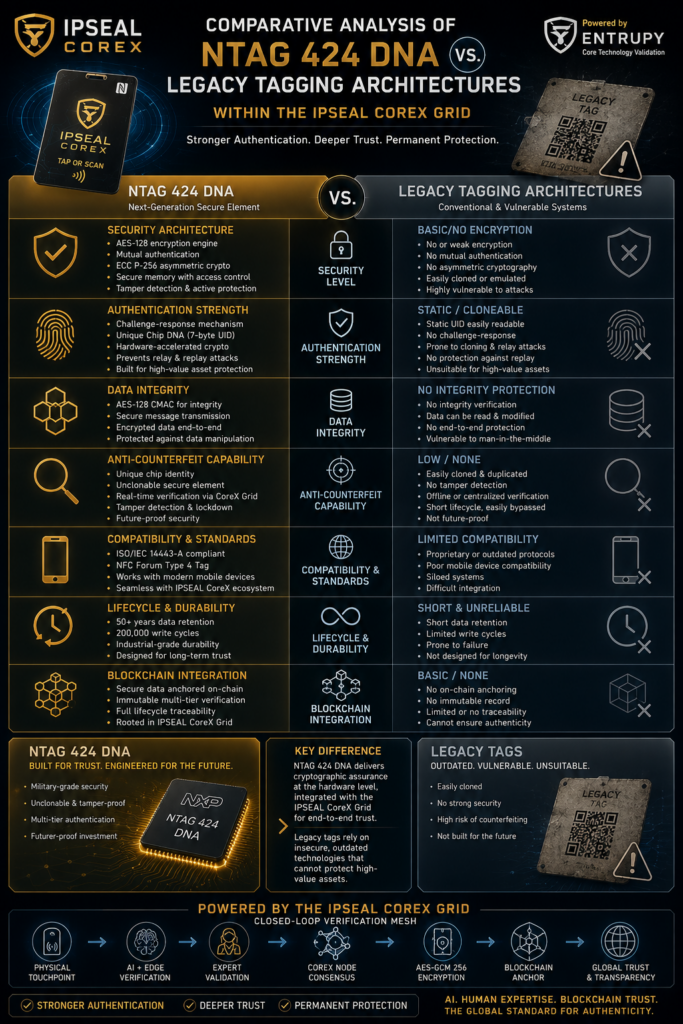
As enterprise supply chains scale into high-velocity global markets, selecting the appropriate physical identifier is a critical operational decision. Historically, brands have relied on static optical codes (standard QR codes, barcodes), passive static RFID/NFC chips, or physical anti-tamper holograms. However, sophisticated counterfeit rings now routinely bypass these legacy mechanisms through optical cloning, signal emulation, and […]
Category Archives: Ipseal CoreX powered by Entrupy information
Ipseal CoreX powered by Entrupy information
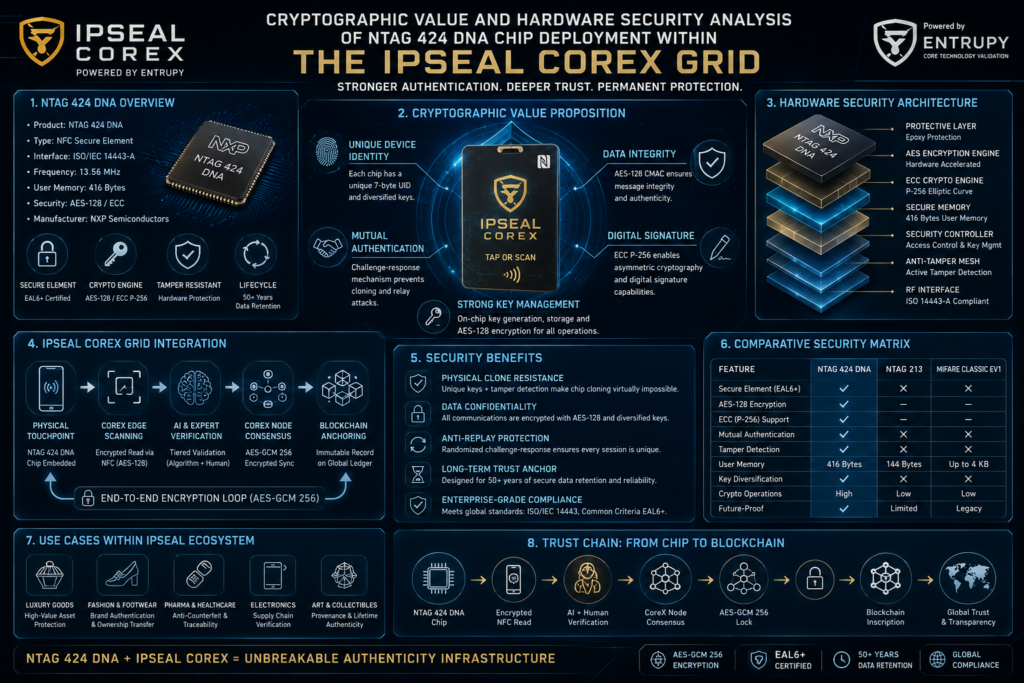
Cryptographic Value and Hardware Security Analysis of NTAG 424 DNA Chip Deployment Within the IPSEAL CoreX Grid
03
Aug
Aug
In the high-stakes landscape of physical asset protection, standard NFC tags and static RFID chips no longer provide sufficient security against modern threat actors. Traditional NFC tags transmit fixed, unencrypted data payloads (such as URL strings or static serial numbers) that can easily be cloned, replayed, or emulated onto cheap commodity chips. To achieve the […]
Ipseal CoreX powered by Entrupy information
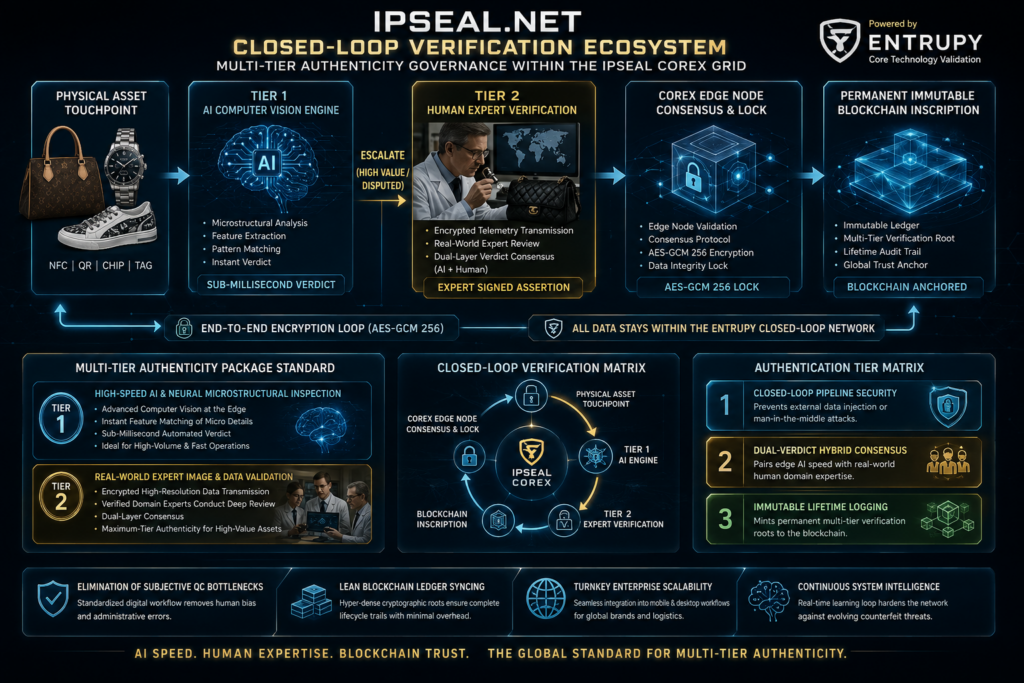
Closed-Loop Verification Ecosystem and Multi-Tier Authenticity Governance Within the IPSEAL CoreX Grid
03
Aug
Aug
In the modern enterprise landscape, single-layer authentication frameworks are no longer sufficient to combat high-grade counterfeiting. Automated algorithmic checks can be tested by bad actors, while manual human inspections are inherently slow and prone to subjective error. To achieve maximum verification integrity, an architecture must combine ultra-fast machine learning with human expertise inside an unbreachable, […]
Ipseal CoreX powered by Entrupy information
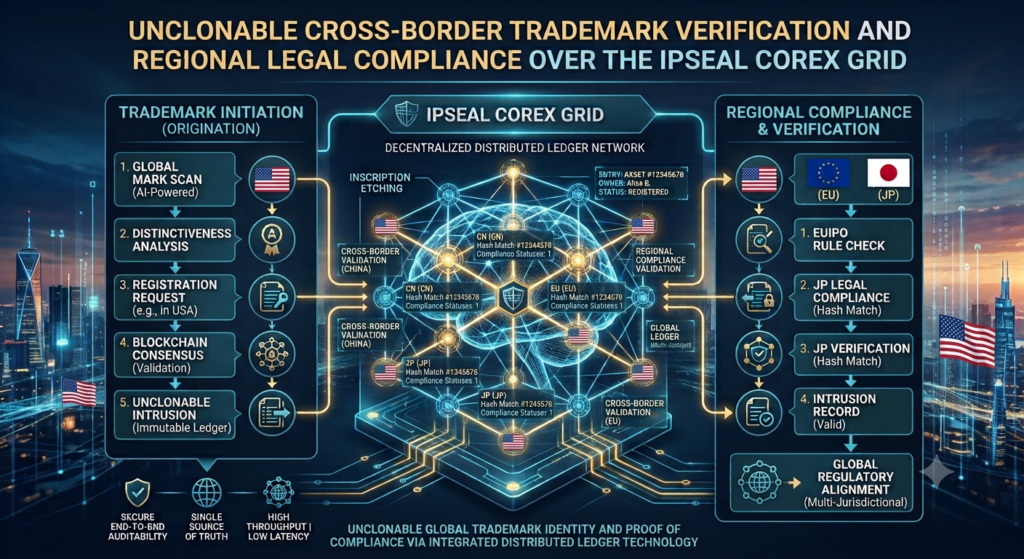
Unclonable Cross-Border Trademark Verification and Regional Legal Compliance Over the IPSEAL CoreX Grid
30
Jun
Jun
In the global enterprise distribution matrix, a critical and highly sophisticated threat vector is the unauthorized exploitation of intellectual property rights, illegal parallel imports, and regional trademark infringements. Modern counterfeiters and gray-market operators do not merely copy physical products; they actively manipulate customs documentation, replicate official corporate stamps, and exploit fragmented local registries to bypass […]
Ipseal CoreX powered by Entrupy information
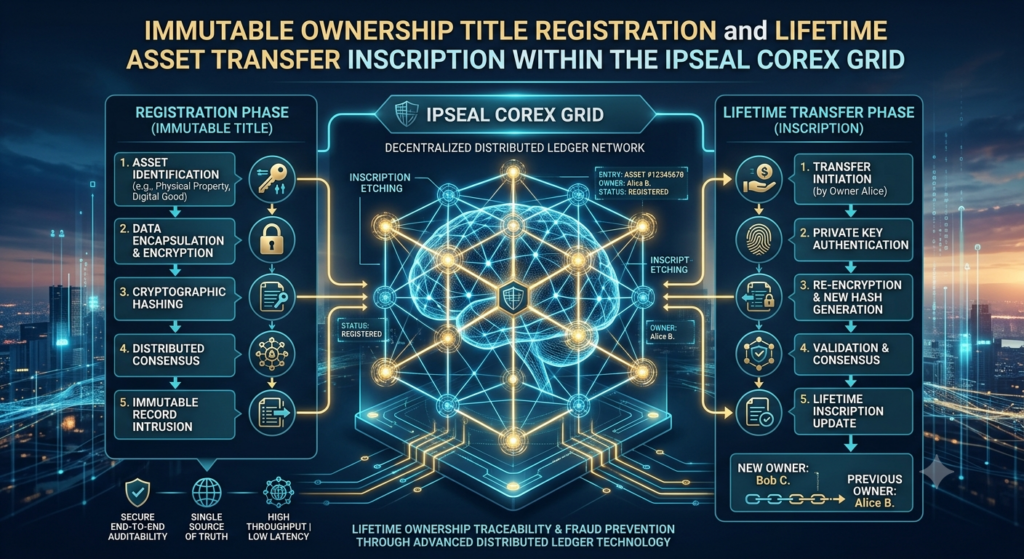
Immutable Ownership Title Registration and Lifetime Asset Transfer Inscription Within the IPSEAL CoreX Grid
30
Jun
Jun
When high-value assets—such as premium Nappa leather bags, specialized luxury footwear, or limited-edition corporate goods—change hands, the transaction demands absolute data integrity. Standard paper receipts, centralized digital invoices, and traditional retail databases remain highly vulnerable to database manipulation, retro-active tampering, and administrative fraud. If a luxury asset is resold on the secondary market, proving its […]
Ipseal CoreX powered by Entrupy information
Factory-Floor Initialization and Early-Stage Manufacturing Integration Within the IPSEAL CoreX Grid

30
Jun
Jun
In global enterprise asset protection, security cannot be treated as a secondary addon or a post-production layer. Waiting until a product is finalized and packaged to apply tracking indicators leaves a critical window open for inventory leakage, overproduction fraud, and unauthorized product substitution. To secure an item completely, its cryptographic identity must be forged at […]
Ipseal CoreX powered by Entrupy information
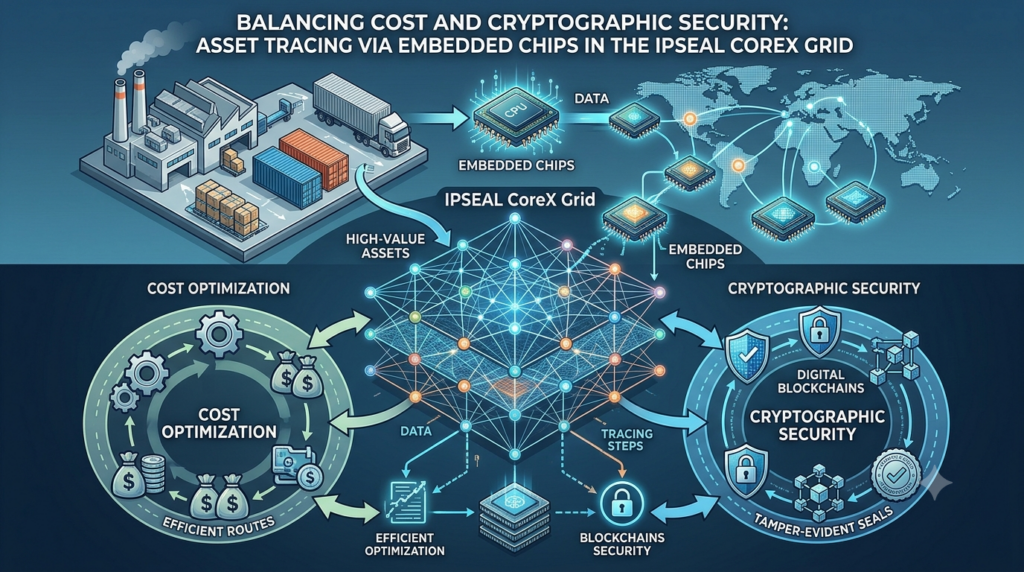
Balancing Cost and Cryptographic Security—Targeting High-Value Asset Tracing via Embedded Chips Within the IPSEAL CoreX Grid
29
Jun
Jun
In the field of global enterprise brand protection, selecting the appropriate security layer is heavily dependent on economic reality. While embedding cryptographic hardware tokens directly into a product during the manufacturing phase offers an unbreachable shield against counterfeiting, it introduces undeniable cost considerations. For a large percentage of consumer goods, the price of specialized secure […]
Ipseal CoreX powered by Entrupy information
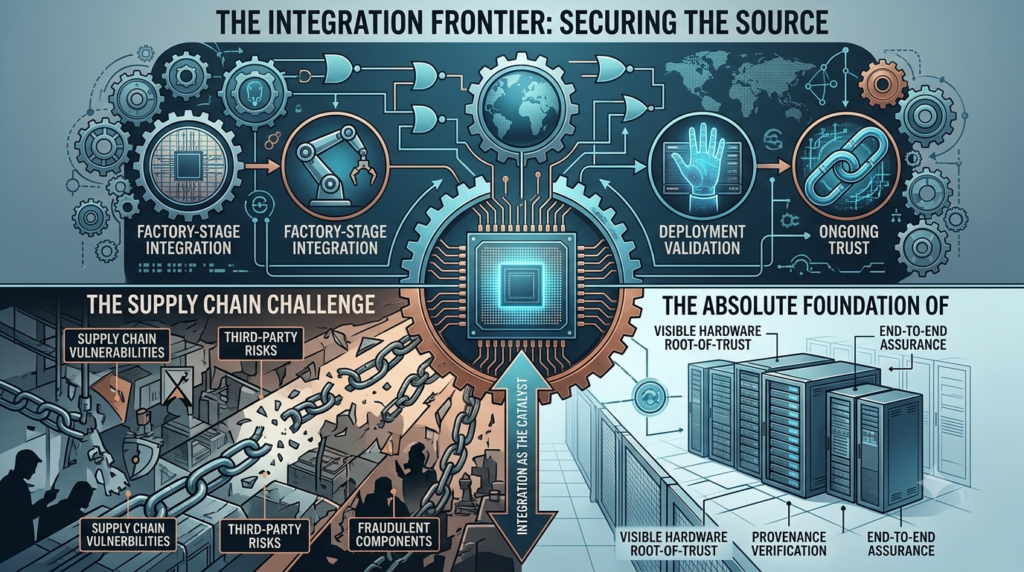
Securing the Source—Why Factory-Stage Hardware Integration is Both the Greatest Supply Chain Challenge and the Absolute Foundation of Absolute Trust
29
Jun
Jun
In the global brand protection landscape, achieving the highest tier of security requires an unyielding, comprehensive architecture. The single greatest point of failure in standard anti-counterfeiting methods is the reliance on post-production security elements. Applying security tags, stickers, or barcodes after a product has already left the assembly line introduces a critical window of vulnerability […]
Ipseal CoreX powered by Entrupy information
Multi-Tier Product Authentication and Immutable Blockchain Ownership Transfer for High-Value Assets Within the IPSEAL CoreX Network

29
Jun
Jun
The rapid expansion of the secondary market for high-value assets—ranging from premium luxury handbags to specialized enterprise products—demands a robust framework for physical asset transfer. Traditional methods of transferring luxury title ownership rely on vulnerable paper certificates and easily altered centralized digital receipts. When an item is resold or traded, verifying its multi-layered structural integrity […]
Ipseal CoreX powered by Entrupy information
Quantifying the Computational Velocity and Architecture of the 10th-Generation Ipseal CoreX Engine

29
Jun
Jun
As global enterprise supply chains scale into billions of data touchpoints, traditional server infrastructures face critical bottlenecks in processing live cryptographic verification requests. Real-time anti-counterfeiting requires an infrastructure that can process high-density material computer-vision datasets and complex cryptographic handshakes concurrently without dropping speed. To answer this demand, IPSEAL.NET introduces its most powerful computational milestone: the […]