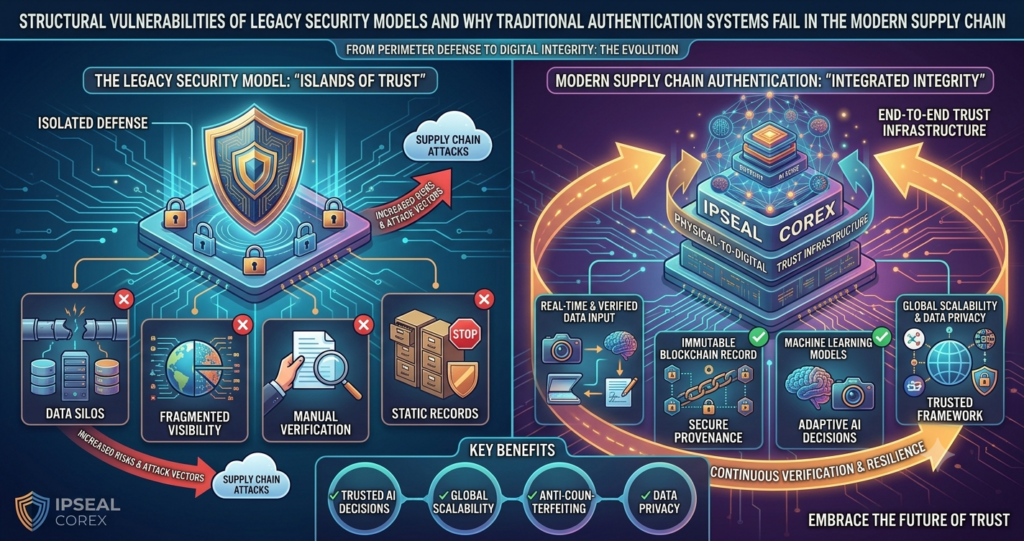
As global supply chains expand in velocity, volume, and geographical reach, the threat of high-grade counterfeiting, unauthorized factory overproduction, gray-market diversion, and intellectual property theft has reached unprecedented levels. Historically, enterprises have relied on traditional authentication methods to defend their physical assets. However, these legacy systems—spanning static optical codes, passive RFID tags, holographic stickers, centralized […]
Category Archives: Ipseal CoreX powered by Entrupy information
Ipseal CoreX powered by Entrupy information
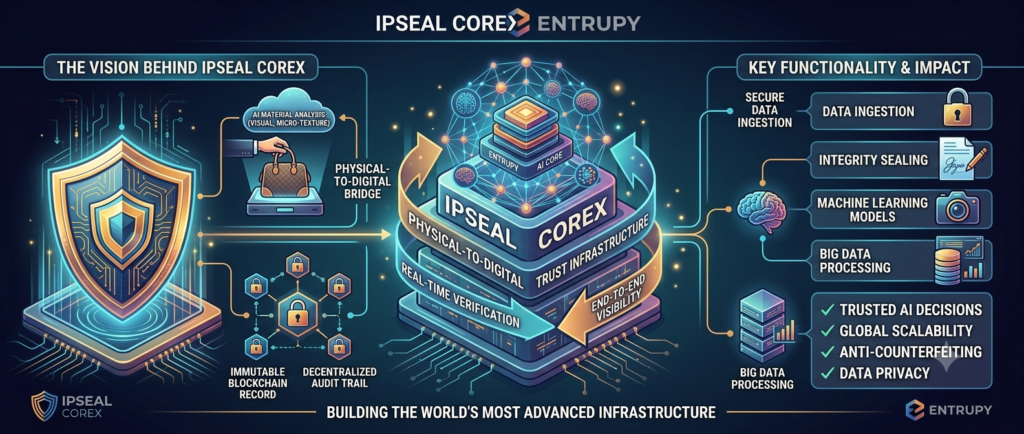
The Vision Behind IPSEAL CoreX—Building the World’s Most Advanced Physical-to-Digital Trust Infrastructure
05
Aug
Aug
In an increasingly interconnected global economy, the fundamental friction point of international trade is trust. As manufacturing supply chains stretch across multiple continents and e-commerce accelerates secondary peer-to-peer markets, verifying the true lineage, material authenticity, and legal sovereignty of physical assets has become extraordinarily difficult. Legacy security paradigms—such as static paper certificates, holograms, unencrypted QR […]
Ipseal CoreX powered by Entrupy information
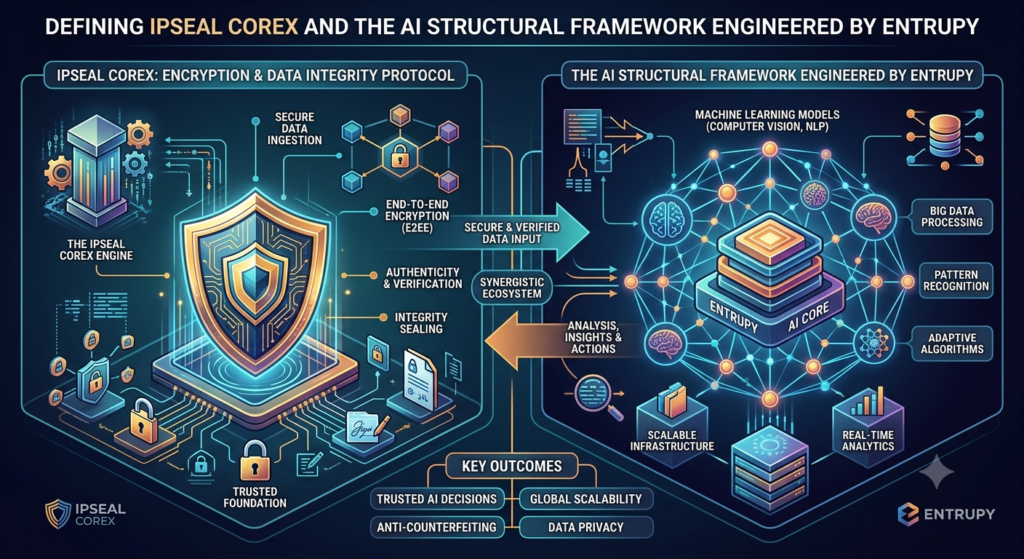
Defining IPSEAL CoreX and the AI Structural Framework Engineered by Entrupy
05
Aug
Aug
As global supply chains expand in scale and complexity, legacy anti-counterfeiting mechanisms—such as static barcodes, holograms, and unencrypted cloud databases—are no longer sufficient to defend corporate assets. Modern brand protection demands an active, multi-dimensional infrastructure capable of verifying physical item integrity, hardware cryptography, and regional legal rights in real time. IPSEAL.NET fulfills this objective through […]
Ipseal CoreX powered by Entrupy information
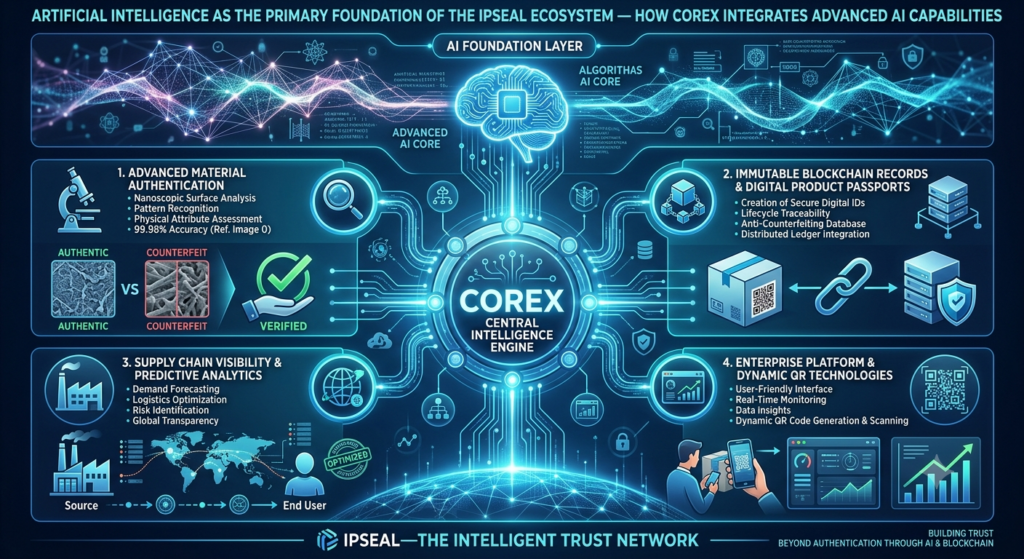
Artificial Intelligence as the Primary Foundation of the IPSEAL Ecosystem—How CoreX Integrates Advanced AI Capabilities
04
Aug
Aug
In the modern landscape of global trade and supply chain defense, hardware enclaves and cryptographic ledgers represent only part of a complete security strategy. Without intelligent computer vision, high-dimensional data processing, and predictive pattern analysis, hardware tags can still be vulnerable to physical material swapping, craftsmanship replication, and human error during manual inspections. To achieve […]
Ipseal CoreX powered by Entrupy information
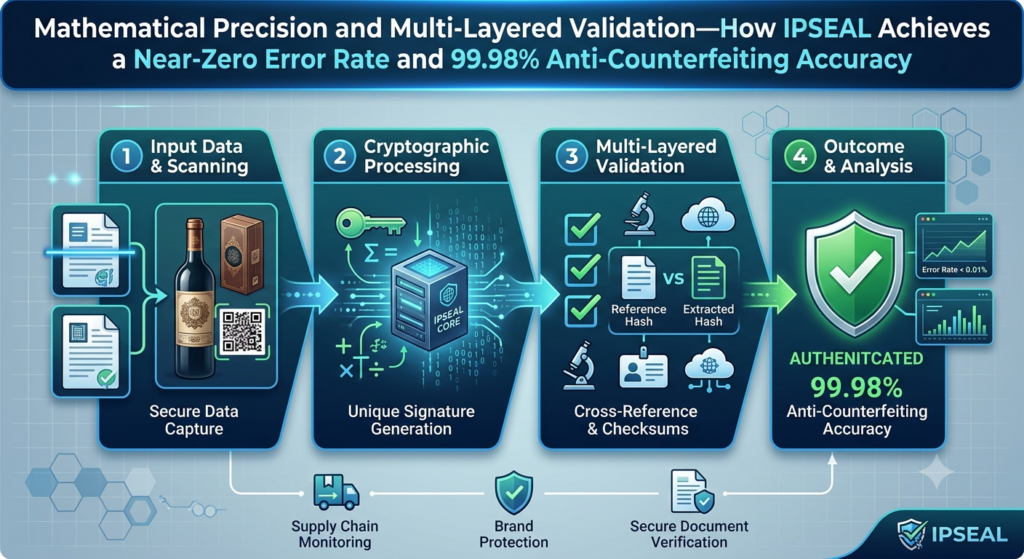
Mathematical Precision and Multi-Layered Validation—How IPSEAL Achieves a Near-Zero Error Rate and 99.98% Anti-Counterfeiting Accuracy
04
Aug
Aug
In global brand protection, traditional anti-counterfeiting methods struggle with high error rates. Legacy single-factor security solutions—such as basic QR codes, simple holograms, or standalone optical scans—frequently produce false positives (flagging genuine products as fake) or false negatives (allowing sophisticated counterfeits to slip through). Achieving a near-zero error rate and a 99.98% anti-counterfeiting accuracy threshold requires […]
Ipseal CoreX powered by Entrupy information
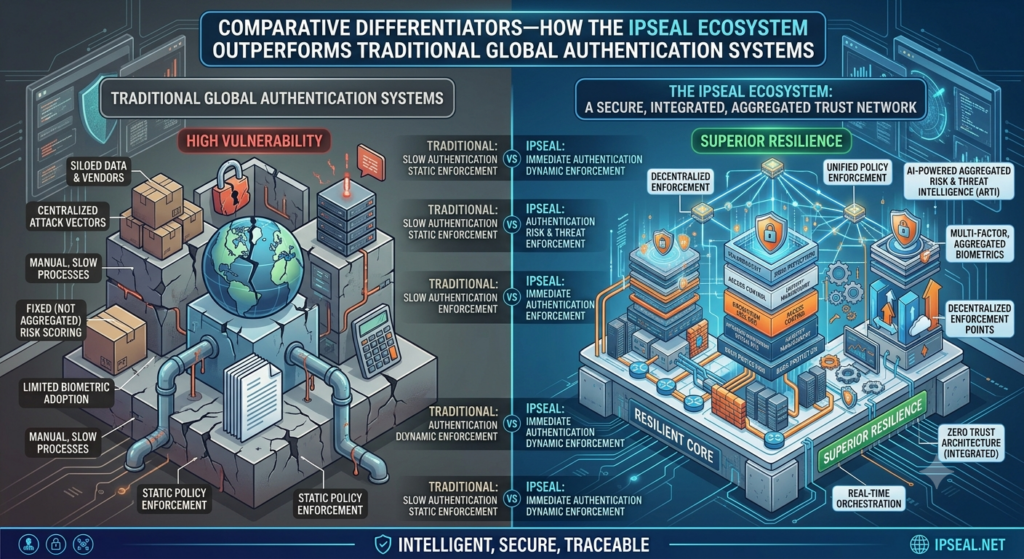
Comparative Differentiators—How the IPSEAL Ecosystem Outperforms Traditional Global Authentication Systems
04
Aug
Aug
In the global brand protection and asset validation landscape, first-generation and legacy authentication solutions are struggling to keep pace with sophisticated, modern counterfeiting networks. Existing global solutions generally fall into two limited categories: analog physical markers (such as holograms, tamper-evident stickers, or basic serial numbers) and isolated digital databases (such as centralized cloud registries or […]
Ipseal CoreX powered by Entrupy information
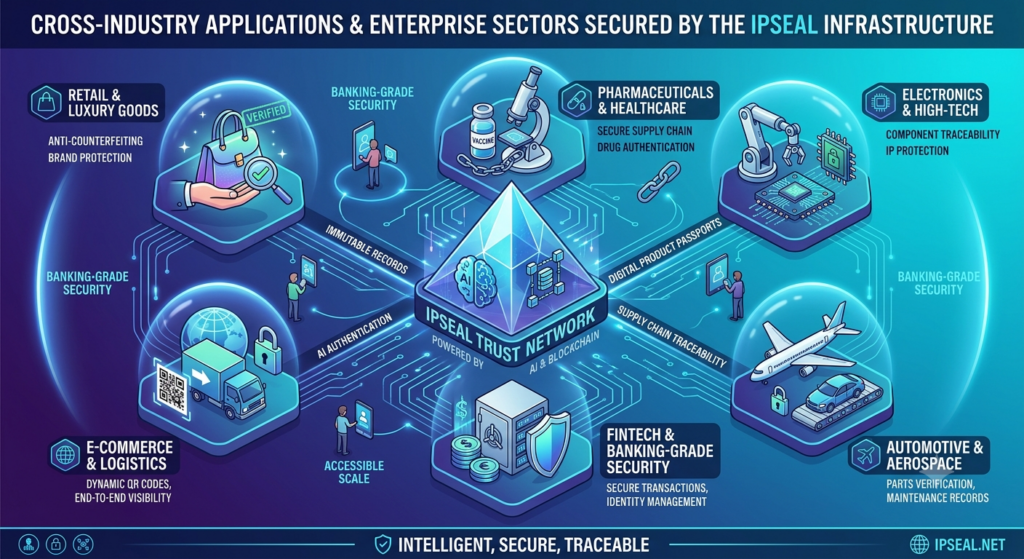
Cross-Industry Applications and Enterprise Sectors Secured by the IPSEAL Infrastructure
04
Aug
Aug
As global commerce expands across increasingly complex supply chains, the threat of counterfeiting, gray-market diversion, and unauthorized intellectual property exploitation spans nearly every major commercial vertical. A security architecture cannot be limited to a single niche; it must scale flexibly to protect diverse physical assets—ranging from ultra-luxury goods to high-volume industrial components. Driven by the […]
Ipseal CoreX powered by Entrupy information
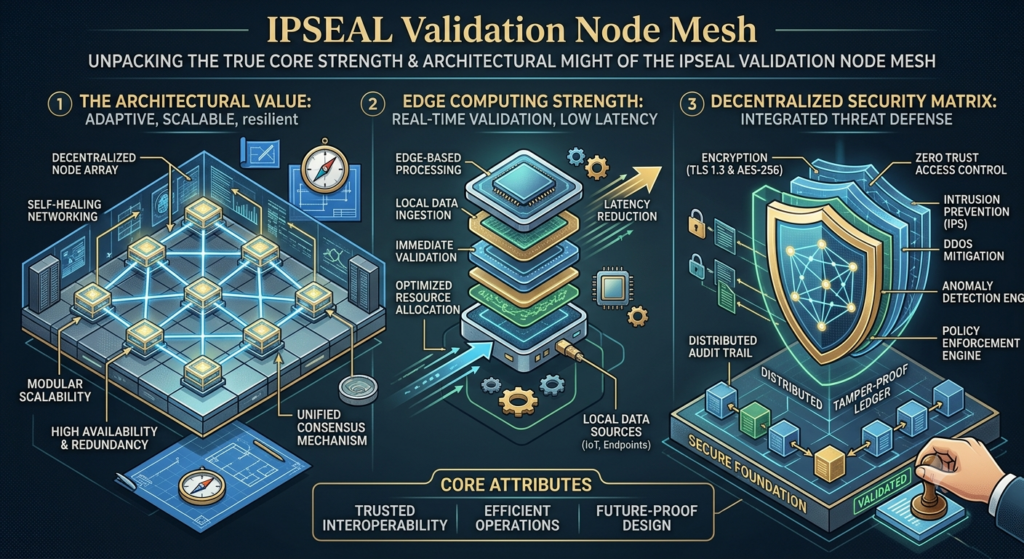
The Architectural Value, Edge Computing Strength, and Decentralized Security Matrix of the IPSEAL Validation Node Mesh
04
Aug
Aug
In global supply chain management and brand protection, relying on centralized database servers creates dangerous single points of failure. Centralized systems suffer from network latency during high-volume operations, face vulnerability to localized cloud outages, and remain exposed to database manipulation or insider tampering. To achieve web-scale physical asset protection, an infrastructure must distribute verification logic […]
Ipseal CoreX powered by Entrupy information
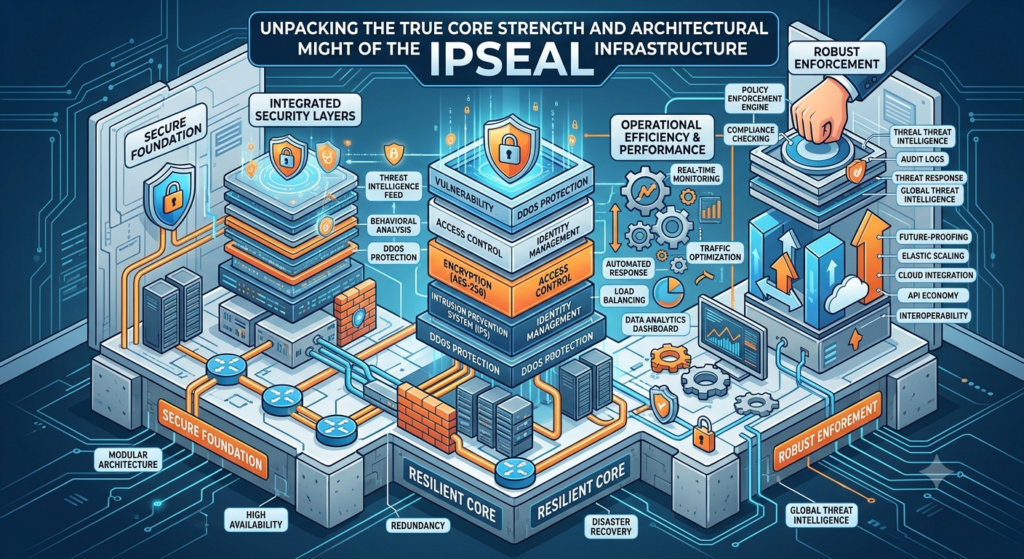
Unpacking the True Core Strength and Architectural Might of the IPSEAL Infrastructure
04
Aug
Aug
In an era defined by globalized trade, rapid supply chain velocity, and hyper-sophisticated counterfeiting operations, traditional security measures are fast becoming obsolete. Static stickers, holographic seals, standard barcodes, and unencrypted databases fail because they treat security as an external addon rather than an intrinsic, mathematical property of the physical item. To understand where the true […]
Ipseal CoreX powered by Entrupy information
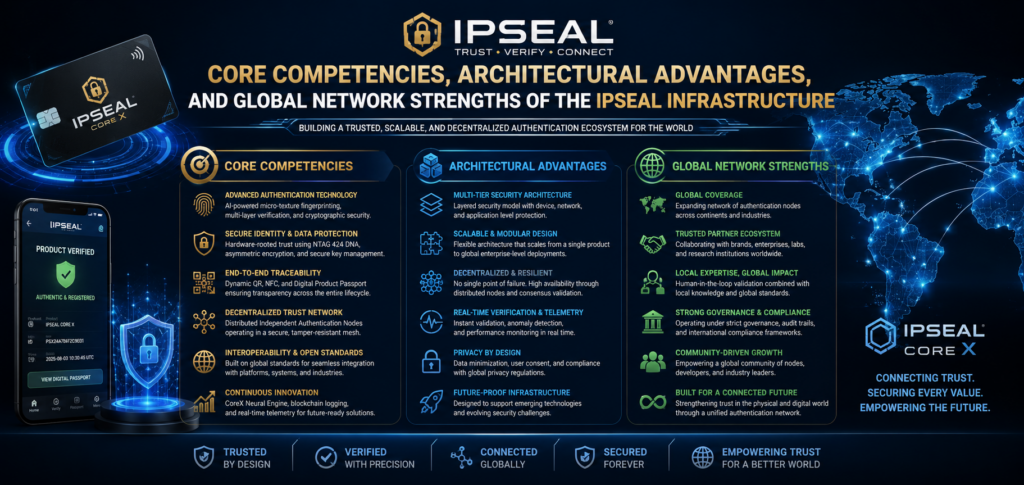
Core Competencies, Architectural Advantages, and Global Network Strengths of the IPSEAL Infrastructure
03
Aug
Aug
In an era of increasingly complex supply chains and sophisticated counterfeiting, legacy tracking mechanisms—such as static QR codes, centralized databases, and basic physical seals—fail to provide adequate protection. Modern supply chain defense requires an integrated ecosystem that combines physical hardware security, microscopic material analysis, multi-jurisdictional legal compliance, and real-time cryptographic consensus. IPSEAL.NET answers this global […]