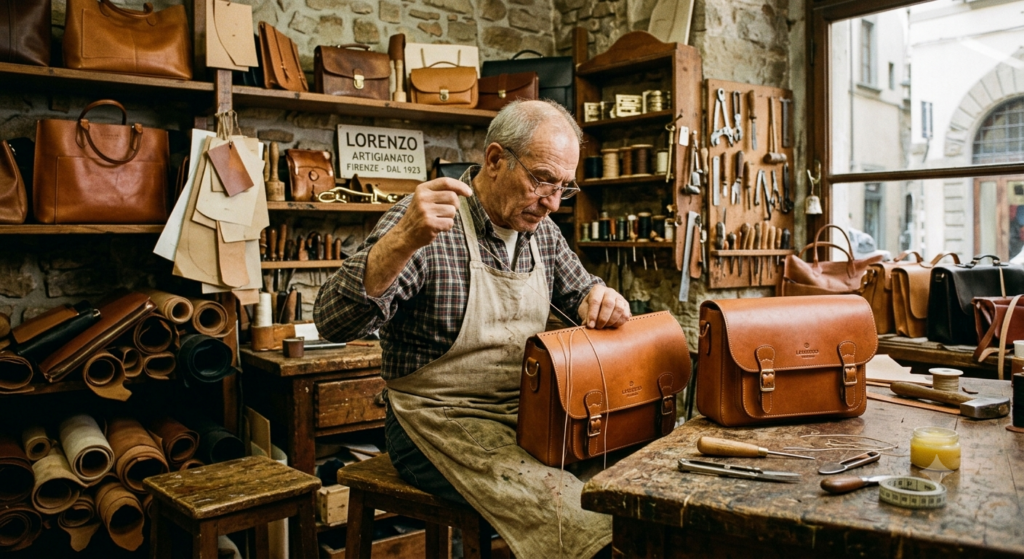
Across the historic leatherworking districts of Florence, Tuscany, and Andalusia, heritage leathercraft represents the pinnacle of luxury, tradition, and uncompromising human mastery. Today, a landmark coalition of 86 bespoke leather manufacturers in Italy and 27 master leather producers in Spain—houses carrying centuries of sacred technique, with some operating continuously for over 200 years—have formally integrated their product lines into the IPSEAL.NET network. Manufacturing physical masterpieces retailing between $1,000 and $20,000 USD, these prestigious ateliers face a modern dilemma: protecting their historic provenance, defending against industrial-grade counterfeiting, and serving global digital-native luxury consumers without losing their artisanal soul or spending millions building complex software infrastructure.
By adopting Ipseal CoreX powered by Entrupy, these 113 historic European houses have executed a seamless transition into the digital era. This paper examines why Europe’s most exclusive leather producers chose this unified framework to protect their heritage, automate global post-sale service, and achieve enterprise-grade technological sovereignty at minimal cost.
1. The Heritage Innovation Dilemma: Timeless Mastery vs. Digital Complexity
For an Italian atelier or Spanish leather workshop with over two centuries of heritage, entering the modern digital economy independently presents severe operational and economic hurdles.
┌────────────────────────────────────────────────────────────────────────┐
│                   THE HERITAGE TRANSFORMATION MATRIX                   │
│                                                                        │
│   [ CENTURIES OF TRADITION ]          [ MODERN MARKET DEMANDS ]        │
│   • 200+ Years of Craftsmanship       • Instant Smartphone Proof       │
│   • Bespoke $1,000–$20,000 Assets     • Zero-Search Global Warranty    │
│   • Hand-Stitched Leather DNA         • Global Counterfeit Defense     │
│                                                                        │
│                                   │                                    │
│                                   ▼                                    │
│             [ BRIDGED VIA IPSEAL COREX POWERED BY ENTRUPY ]            │
└────────────────────────────────────────────────────────────────────────┘
-
The High Cost of In-House Tech: Building proprietary dynamic silicon chips, microstructural material computer vision models, and global edge computing infrastructure would require millions of dollars in capital expenditure and technical headcount that conflict with the operational model of a traditional workshop.
-
The Turnkey IPSEAL Bridge: Leveraging the platform developed by our independent entity, Entrupy, IPSEAL.NET provides these 113 European manufacturers with a ready-to-deploy, enterprise-grade digital architecture. Without writing a single line of code or altering their traditional leatherworking techniques, ateliers transform hand-crafted leather goods into self-authenticating, digital-native assets.
2. Four Technical Pillars Securing $1,000–$20,000 Heritage Leather Assets
┌────────────────────────────────────────────────────────────────────────┐
│                     FOUR-VECTOR PROTECTION MATRIX                      │
│                                                                        │
│  1. SILICON CRYPTOLOGY: Dynamic NTAG 424 DNA (AES-128 SUN Hashes)     │
│  2. MATERIAL DNA AI: Cellular Hide & Grain Topography Extraction      │
│  3. STRUCTURAL BINDING: AES-GCM 256 Parent-Child Cryptographic Lock    │
│  4. ZERO-FOOTPRINT ROUTING: Instant National Partner & Hotline Connect │
└────────────────────────────────────────────────────────────────────────┘
Pillar A: Cryptographic Silicon Enclaves (AES-128 SUN Hashes)
Each luxury leather piece is embedded with a hardware enclave powered by NTAG 424 DNA silicon running Secure Unique NFC Message (SUN) technology. Every smartphone tap generates a single-use AES-128 cryptographic hash paired with an incrementing internal counter, rendering static signal copying, optical label reproduction, and URL spoofing mathematically impossible.
Pillar B: Cellular Leather Grain & Microstructural DNA AI
Powered by Entrupy’s computer vision engines, the platform inspects raw leather at the microscopic level—extracting natural biological pore distributions, grain randomness, and hand-stitching topographies. The system converts these physical properties into numeric feature vectors, binding physical matter directly to the dynamic silicon enclave.
┌────────────────────────────────────────────────────────────────────────┐
│                   DUAL PARENT-CHILD CRYPTOGRAPHIC LOCK                  │
│                                                                        │
│   [ Outer Chassis Token (Parent Key) ]                                 │
│                   │                                                    │
│                   ▼  ◄── Dynamic AES-GCM 256 Mutual Challenge ──►      │
│                   │                                                    │
│   [ Internal Component / Material DNA Vector (Child Key) ]             │
└────────────────────────────────────────────────────────────────────────┘
Pillar C: Total Defense Against Tag Swapping (Parent-Child Binding)
Counterfeiters often peel genuine security tags off authentic products to affix them to fake items. CoreX prevents “tag peeling” by executing asymmetric AES-GCM 256-bit binding between outer identity anchors (Parent Keys) and internal material feature vectors or secondary tokens (Child Keys). If a tag is detached from its original leather chassis, the mutual mathematical handshake breaks instantly.
Pillar D: Zero-Footprint Global Post-Sale Routing
Instead of opening expensive physical service centers in foreign markets like Singapore, Thailand, or South Korea, an Italian or Spanish workshop can designate a minimal micro-office or accredited local master workshop. When an Asian client taps their handbag or footwear, the Ipseal CoreX engine detects their location and instantly displays the designated local service address and direct regional hotline phone number. Updating partner details in the central dashboard updates all future physical scans globally in real time.
3. Executive Matrix: Legacy Artisan Operations vs. IPSEAL CoreX Integration
┌────────────────────────────────────────────────────────────────────────────────────────┐
│                     TRADITIONAL WORKSHOP vs. IPSEAL COREX INTEGRATION                  │
├───────────────────────┼────────────────────────────────┬───────────────────────────────┤
│ OPERATIONAL VECTORS   │ TRADITIONAL HERITAGE ATELIER   │ IPSEAL COREX POWERED BY ENTRUPY│
├───────────────────────┼────────────────────────────────┼───────────────────────────────┤
│ Tech R&D Overhead     │ Multi-Million Dollar Barrier   │ Zero R&D (Turnkey Deployment) │
│ Asset Authentication  │ Paper Certificates / Stamps    │ Dynamic AES-128 SUN Hashes    │
│ Leather Inspection    │ Human Eye Only                 │ Microstructural Fiber DNA AI  │
│ Tag Swap Defense      │ None (Vulnerable to Peeling)   │ AES-GCM 256 Parent-Child Lock │
│ Global Post-Sale      │ Expensive Physical Infrastructure│ Single-Tap Dynamic Routing    │
│ System Precision      │ Variable / Human Error Margin  │ 99.98% Accuracy Benchmark     │
└───────────────────────┴────────────────────────────────┴───────────────────────────────┘
-
Sub-Millisecond Edge Execution: Coordinated by our 10th-Generation Central Core, localized edge nodes process key decryption, material vector checks, and geolocation routing locally in sub-milliseconds.
-
Hybrid Closed-Loop Escalation: If an ultra-rare 200-year-old vintage piece or heavily customized leather item creates an edge-case anomaly for the AI, the interface opens a direct bridge to manufacturer-accredited master experts, maintaining a 99.98% accuracy benchmark.
-
Statutory Legal Compliance: Managed under our Entrupy standard, national trademark registrations, class certifications, and authorized distributor lists are encoded directly into the product’s digital passport, protecting international trade rights across border customs nodes.
Conclusion: Securing the Next 200 Years of Craftsmanship
By joining forces with IPSEAL.NET, these 86 Italian and 27 Spanish leather manufacturers have proven that ancient craftsmanship and cutting-edge silicon cryptology do not compete—they complete each other. Driven by Ipseal CoreX powered by Entrupy, this unified architecture enables historic workshops to leap directly into modern enterprise commerce with minimal investment. Their physical art remains untainted, their brand heritage is protected against global counterfeit networks, and their international clients enjoy instant, borderless trust with a single tap.
