
In traditional supply chain verification and enterprise brand protection, centralized security architectures introduce critical vulnerabilities. Single-point cloud servers are inherently prone to geographic latency bottlenecks, cloud outages, localized cyberattacks, and internal database manipulation. Furthermore, centralized models struggle to enforce cross-border intellectual property rights and verify physical asset integrity across international trade corridors in real time. […]
Tag Archives: Ipseal CoreX powered by Entrupy
In the evolving field of global trade defense and brand protection, legacy security systems have reached their architectural limits. Static optical barcodes, holograms, unencrypted NFC chips, and centralized cloud databases were designed for an earlier era of supply chain management. Against modern, highly organized counterfeiting networks, these traditional methods fail due to optical copying, tag […]
In an era of hyper-connected supply chains and rapid digital commerce, establishing trust across a decentralized global community requires more than isolated security features. A truly borderless network depends on a shared, highly intelligent validation layer capable of verifying physical item integrity, cryptographic authenticity, and regional legal compliance in real time. IPSEAL.NET achieves this level […]
Ipseal CoreX powered by Entrupy information
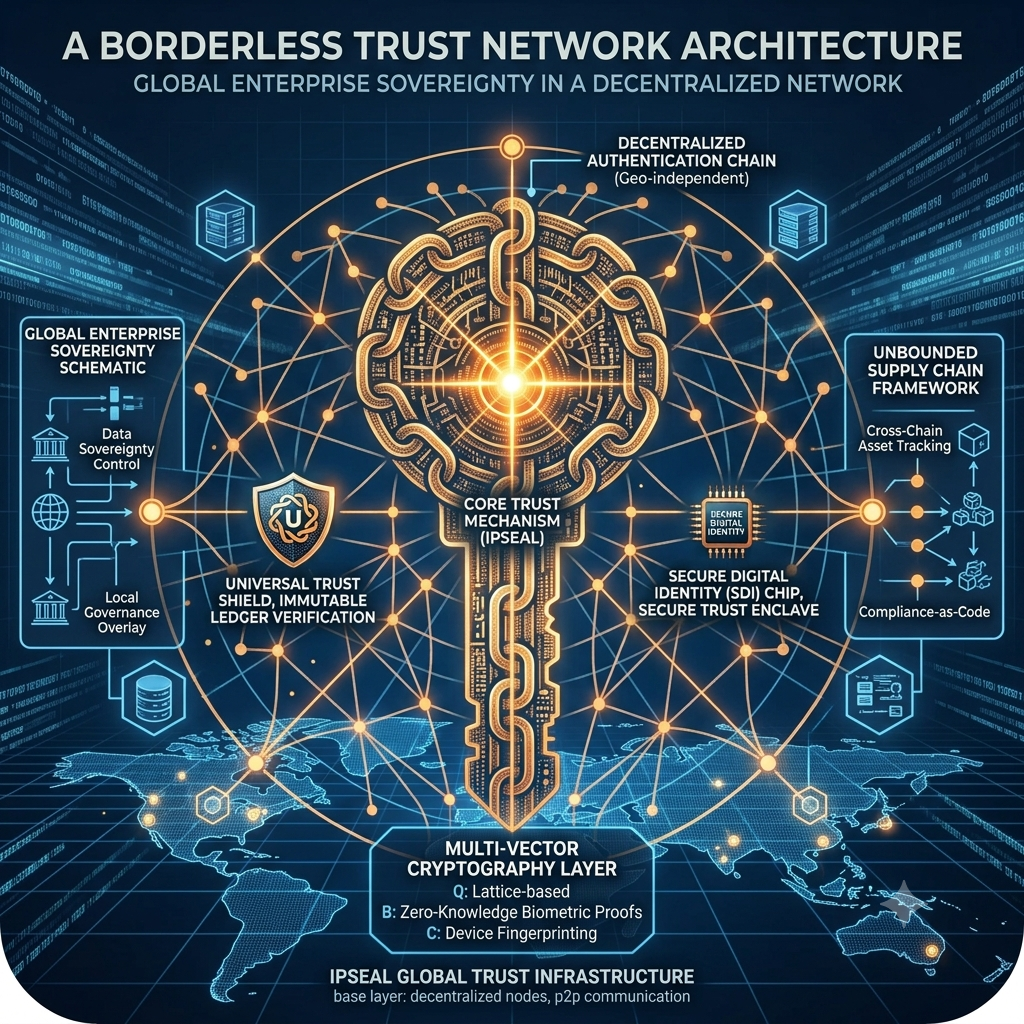
Designing a Borderless Trust Network—Architectural Blueprint, Multi-Vector Cryptography, and Global Enterprise Sovereignty
06
Aug
Aug
In an increasingly digitized global economy, supply chains operate across complex, multi-jurisdictional networks. Physical assets originate in localized factory networks, transition through international customs corridors, pass through complex distribution centers, and circulate indefinitely across global primary and secondary retail markets. However, traditional security infrastructure remains dangerously fragmented. When physical asset protection relies on localized cloud […]
Ipseal CoreX powered by Entrupy information
Global Authentication Without Geographic Limits—Universal Asset Sovereignty Across Unbounded Supply Chains

06
Aug
Aug
In the modern hyper-globalized economy, physical trade knows no boundaries. A high-value asset may be manufactured in Asia, transit through distribution hubs in the Middle East, pass customs checkpoints in Europe, and ultimately enter primary or secondary retail markets in North America. However, traditional anti-counterfeiting and tracking systems remain constrained by geographic limits—failing due to […]
Ipseal CoreX powered by Entrupy information
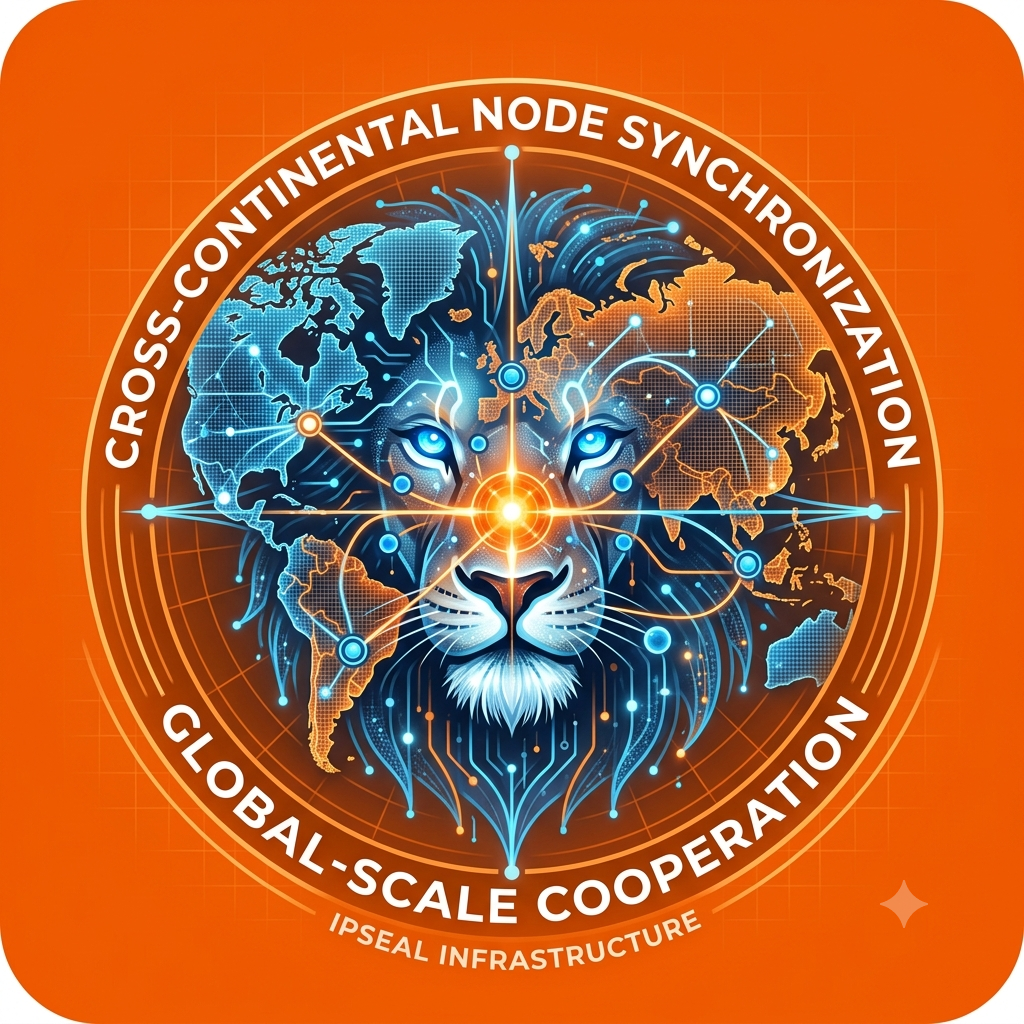
Cross-Continental Node Synchronization—How Autonomous Authentication Nodes Cooperate Global-Scale Across the IPSEAL Infrastructure
06
Aug
Aug
In modern enterprise logistics, physical assets move rapidly across continental borders—originating in manufacturing facilities in Asia, passing through transit hubs in Europe, and entering retail networks in North America. Traditional anti-counterfeiting tracking systems rely on single, centralized cloud databases to maintain record continuity across these long distances. However, centralized architectures struggle with cross-continental network latency, […]
Ipseal CoreX powered by Entrupy information
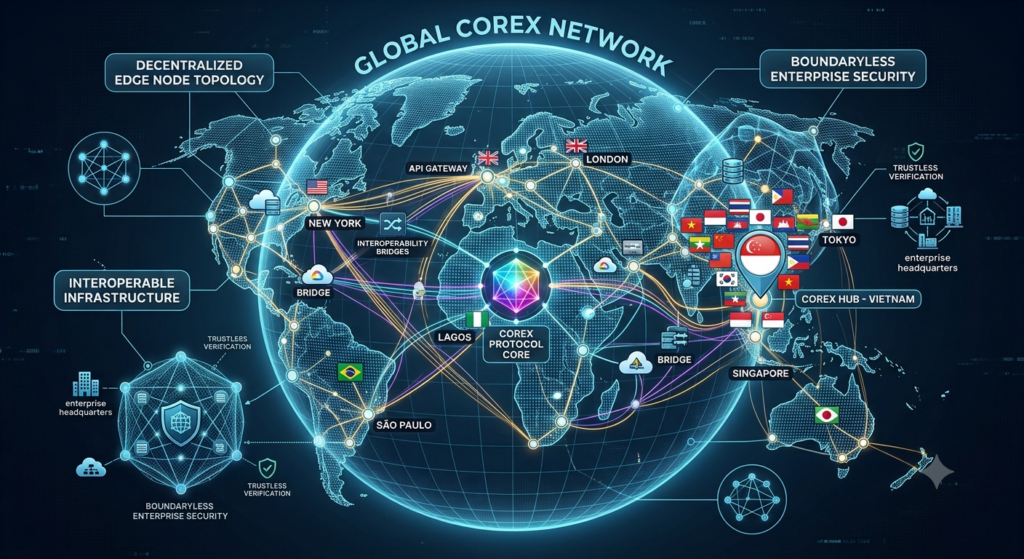
Mapping the Global CoreX Network—Decentralized Edge Node Topology, Interoperable Infrastructure, and Boundaryless Enterprise Security
06
Aug
Aug
In an era of hyper-globalized trade, supply chains no longer move in linear, single-direction paths. Modern enterprise assets originate across decentralized factory floors, navigate complex international customs corridors, transition through multi-tiered logistics hubs, and circulate endlessly across global primary and secondary retail markets. Securing this vast physical movement requires an architectural topology that is as […]
Ipseal CoreX powered by Entrupy information
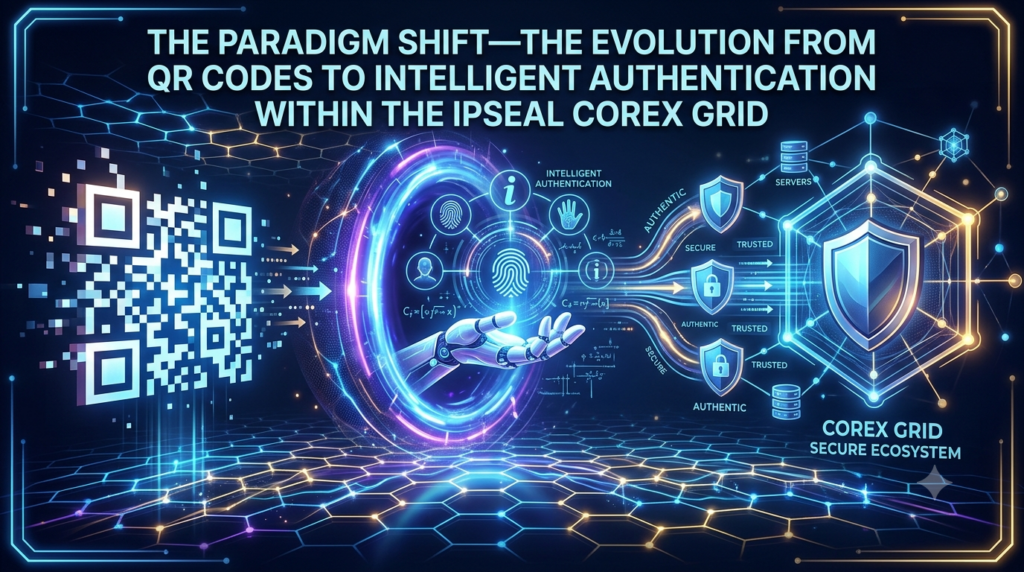
The Paradigm Shift—The Evolution from QR Codes to Intelligent Authentication Within the IPSEAL CoreX Grid
06
Aug
Aug
In the early era of supply chain digitization, static optical identifiers—primarily standard Barcodes and Quick Response (QR) codes—revolutionized inventory tracking and retail logistics. They offered a low-cost, convenient mechanism to bridge physical packaging with digital URLs and database records. However, as global trade accelerated and counterfeiting networks evolved into sophisticated technological operations, the fatal flaw […]
Ipseal CoreX powered by Entrupy information
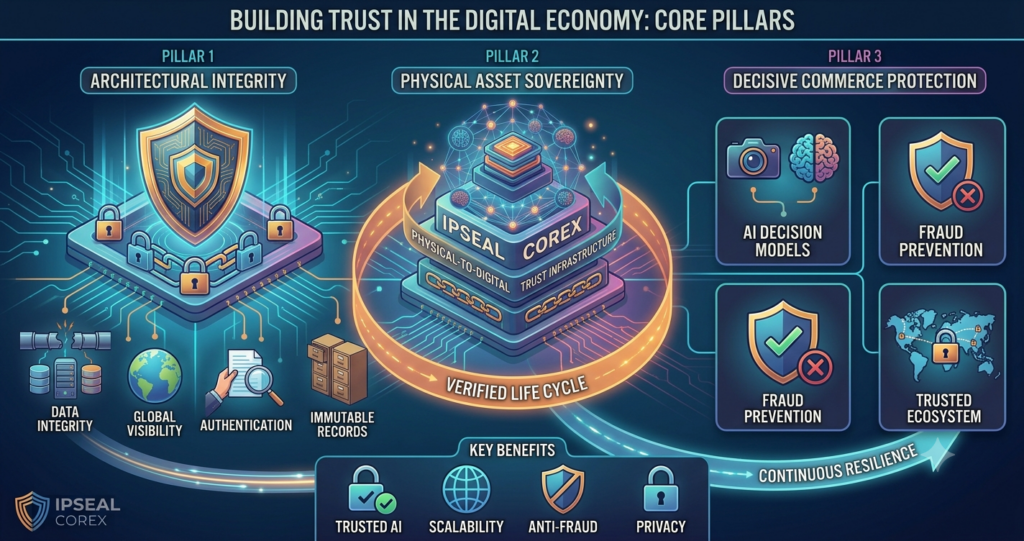
Building Trust in the Digital Economy—Architectural Integrity, Physical Asset Sovereignty, and Decisive Commerce Protection
05
Aug
Aug
As global business transitions deeper into a hyper-connected digital economy, the fundamental currency of international trade is no longer merely speed or capital—it is trust. Modern commerce moves at unprecedented velocity: physical goods are manufactured across decentralized global networks, bought and sold via borderless digital channels, and traded across secondary peer-to-peer marketplaces. However, this digital […]
Ipseal CoreX powered by Entrupy information
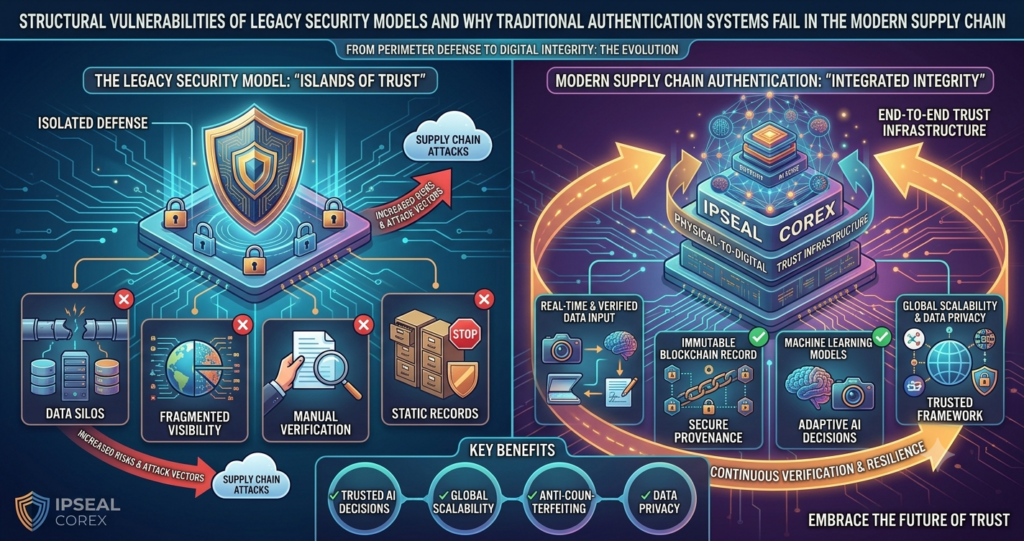
Structural Vulnerabilities of Legacy Security Models and Why Traditional Authentication Systems Fail in the Modern Supply Chain
05
Aug
Aug
As global supply chains expand in velocity, volume, and geographical reach, the threat of high-grade counterfeiting, unauthorized factory overproduction, gray-market diversion, and intellectual property theft has reached unprecedented levels. Historically, enterprises have relied on traditional authentication methods to defend their physical assets. However, these legacy systems—spanning static optical codes, passive RFID tags, holographic stickers, centralized […]