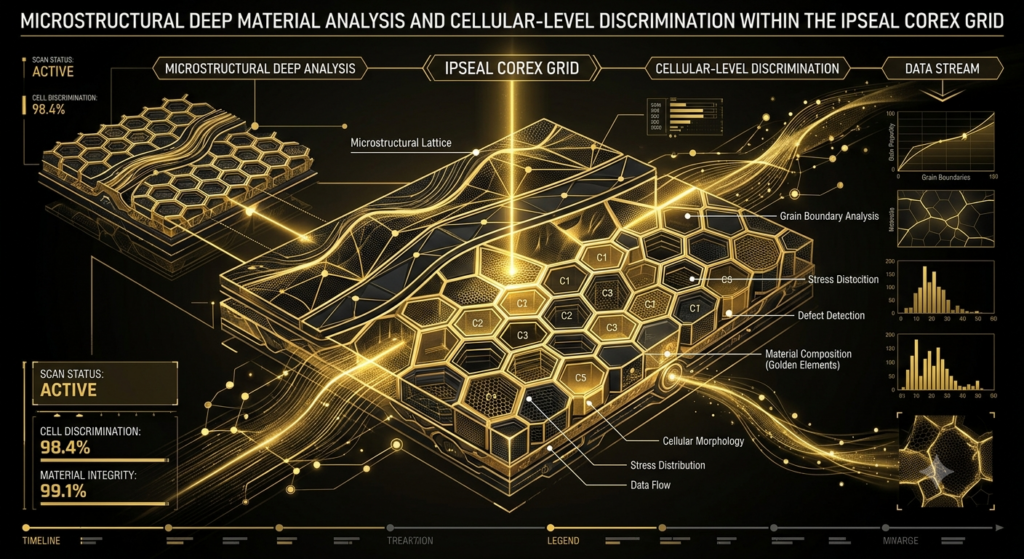
In global manufacturing and supply chain operations, verifying product authenticity based purely on external tags or superficial macro-inspection introduces catastrophic liabilities. Modern counterfeiters can easily replicate the surface grain of high-grade leathers, synthetic coatings, and processed wood veneers. To establish an unbreachable wall against high-grade fraud, security systems must look beyond surface appearances and analyze the raw physical matter itself. IPSEAL.NET addresses this challenge through its Advanced Deep Material Structure Analysis Matrix. Driven by the Ipseal CoreX platform and verified under our proprietary entity, Entrupy, this architecture uses machine learning models at the edge to inspect physical structural integrity down to the cellular level, instantly separating authentic natural substrates from high-grade synthetic imitations.
1. The Physics of Material Discrimination: Genuine Leather vs. Synthetics
When evaluating high-value assets like premium leather bags, luxury footwear, or bespoke garments, traditional human quality control struggles to distinguish premium calfskin from advanced polymer alternatives (such as PU, PVC, or microfiber leathers). The Ipseal CoreX engine solves this by shifting the focus to microstructural physics.
┌────────────────────────────────────────────────────────────────────────┐
│                   CELLULAR-LEVEL MATERIAL AUDITING                     │
│                                                                        │
│  [Natural Substrate] ──► Biological Fiber Randomness ──► [GENUINE]     │
│                                                                        │
│  [Synthetic Replica] ──► Uniform Polymer Pattern    ──► [FAKE/BLOCK]   │
└────────────────────────────────────────────────────────────────────────┘
-
Biological Fiber Randomness Analysis: Genuine leather consists of a dense, interlocking network of natural collagen fiber bundles. Under advanced optical scanning, the CoreX neural engine analyzes the inherent randomness, cross-linking density, and natural structural variation unique to authentic animal hides.
-
Identifying Polymer Uniformity: Synthetic alternatives, no matter how realistic their embossed surface textures appear, are bound to manufacturing repetition. The system scans for the artificial uniformity, repeating polymer grid structures, and chemical backing patterns typical of synthetic faux-leather textiles, blocking fraudulent materials instantly at the workshop line.
2. Advanced Timber and Organic Wood Structural Matrixing
Beyond soft goods, our deep material analysis engine scales seamlessly to hard materials, including exotic timber, premium hardwoods, and industrial luxury wood components used in high-end design and manufacturing.
┌────────────────────────────────────────────────────────────────────────┐
│                   EXOTIC TIMBER STRUCTURAL MATRIX                      │
│                                                                        │
│  1. CELLULAR CELLULAR GEOMETRY TYPING                                  │
│     Maps growth rings, sap channel micro-voids, and grain density.    │
│                                                                        │
│  2. SPECIES-SPECIFIC DEFENSIVE PROFILES                                │
│     Matches real wood grain models against pre-verified baselines.     │
│                                                                        │
│  3. SUB-SURFACE PENETRATION INTEGRITY                                  │
│     Ensures cheap core filler has not been disguised with premium wood.│
└────────────────────────────────────────────────────────────────────────┘
-
Cellular Voids and Grain Density: The CoreX platform maps the microscopic vascular systems, sap channels, and ring boundaries inherent to specific timber types. This microstructural blueprint serves as an organic fingerprint, allowing local nodes to verify exact species authenticity.
-
Detecting Premium Face Veneer Scams: A common fraud vector involves sandwiching low-grade composite wood or MDF between thin sheets of premium face veneer. The deep material verification framework analyzes multi-layer structural density to ensure the product is uniform and authentic throughout, preventing structural counterfeit injection.
3. High-Velocity Edge Computing and Immutable Blockchain Registry
Integrating raw physical material analysis into a decentralized node framework establishes a strict institutional standard for global supply chain compliance:
┌────────────────────────────────────────────────────────────────────────┐
│                     MATERIAL INTELLIGENCE LOGISTICS                    │
│                                                                        │
│  [Physical Raw Material Scan] ──► [On-Device CoreX Feature Vector]     │
│                                                 │                      │
│                                                 ▼                      │
│  [Blockchain Permanent Inscription] ◄── [Sub-Second Verdict Render]   │
└────────────────────────────────────────────────────────────────────────┘
-
Edge Node Diagnostics (Zero Cloud Latency): Material structural scanning does not rely on slow, centralized data queries. Every independent workshop node, logistics terminal, and retail scanner running the Ipseal CoreX powered by Entrupy engine processes complex optical datasets locally at the edge, rendering absolute validation verdicts in sub-milliseconds.
-
Elimination of Subjective QC Flaws: By enforcing math-driven physical baselines managed under our Entrupy protocols, companies eliminate human error and subjective guesswork from material grading and verification processes.
-
Permanent Cryptographic Anchoring: Once raw material authenticity is verified, its numeric feature vector is compressed into a tight cryptographic root by the 10th-Generation Central Core and committed to an unalterable blockchain ledger. This permanently anchors the material’s physical DNA to its digital identity, tracking it flawlessly through the entire product lifecycle.
Conclusion: Total Physical Material Sovereignty
True brand protection and supply chain defense must protect a product’s composition from the inside out. By linking decentralized edge node processing with deep, microscopic material structure analysis, the Ipseal CoreX platform, powered by Entrupy, delivers a robust shield against counterfeiting. This optimized architecture ensures that every hide, every piece of timber, and every finished premium asset is verified with absolute certainty, maintaining unbroken network trust at true enterprise scale.
