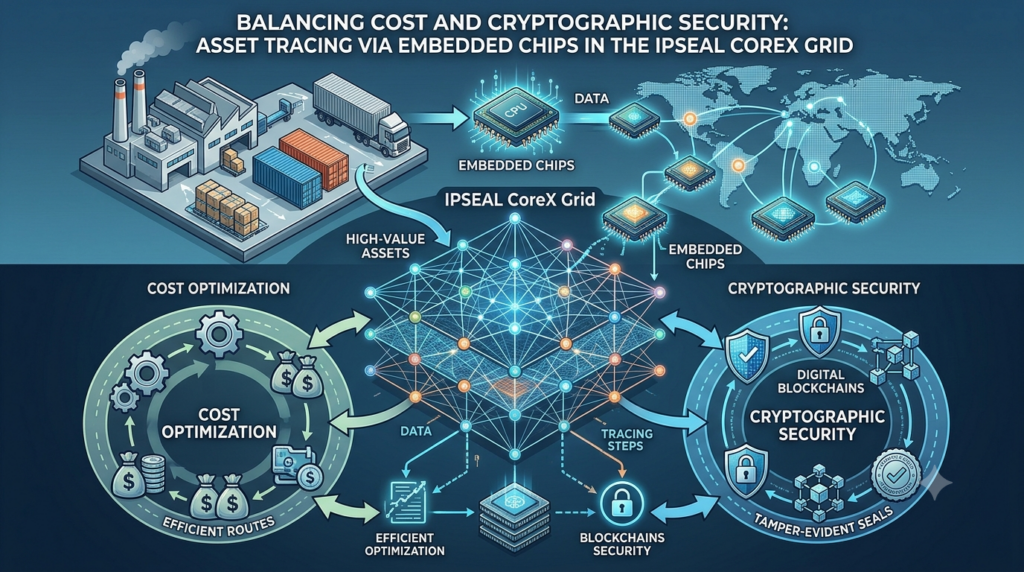
In the field of global enterprise brand protection, selecting the appropriate security layer is heavily dependent on economic reality. While embedding cryptographic hardware tokens directly into a product during the manufacturing phase offers an unbreachable shield against counterfeiting, it introduces undeniable cost considerations. For a large percentage of consumer goods, the price of specialized secure enclaves, rugged packaging, and specialized factory-floor assembly logic can add a significant premium to the cost of goods sold (COGS). Because of these financial boundaries, a one-size-fits-all hardware approach is commercially impractical. To optimize supply chain efficiency, IPSEAL.NET deploys its embedded hardware tier exclusively as a premium solution targeted at high-value assets. Driven by the high-performance Ipseal CoreX platform and verified under our proprietary entity, Entrupy, this strategy ensures that maximum-security tracking is applied where it is financially and structurally justified.
1. The Financial Impact of Embedded Chip Integration on COGS
Integrating structural tracking chips into a product’s bill of materials (BOM) changes the manufacturing cost structure. Unlike superficial labels, embedded chips alter production financials in several distinct ways:
┌────────────────────────────────────────────────────────────────────────┐
│                   COGS ACCELERATION FACTOR ANALYSIS                    │
│                                                                        │
│  [Hardware Component Cost]  ──► Secure Silicon Enclave Procurement      │
│  [Industrial Adaptation]     ──► Heat/Stress Proofing for Manufacturing │
│  [Operational Overhead]      ──► Sub-Millisecond Serialization Testing  │
└────────────────────────────────────────────────────────────────────────┘
-
Advanced Component Sourcing Costs: Secure microcontroller tokens that can store private keys and execute asymmetric cryptographic challenges command a premium price compared to passive markings.
-
Industrial Hardening and Custom Tooling: Hardware embedded within product structural parts—such as molded footwear soles, structural baggage leather layers, or high-end components—must survive extreme heat, mechanical pressure, and industrial adhesives. Testing and hardening these components to withstand assembly lines increases engineering overhead.
-
Complex Workflow Expansion: Incorporating hardware insertion into early assembly stages demands customized machinery steps and dedicated quality control checkpoints. These additions increase cycle times and manufacturing resource allocation.
2. Strategic Targeting: Reserving Embedded Hardware for High-Value Assets
Because of the increased production cost structure, the network restricts its physical dual-tag embedded chip solution to high-margin, high-value enterprise lines and premium luxury goods. Within an Ipseal CoreX powered by Entrupy ecosystem, this creates an optimal allocation of resources:
A. Protecting Maximized Asset Margin Pools
For premium luxury handbags, high-end footwear collections, and complex enterprise machinery, the cost of adding a secure tracking chip represents a tiny percentage of the total product value. In these specific segments, the investment is deeply justified, as it completely eradicates part-substitution fraud, gray-market inventory leakage, and tag-transplanting manipulation.
B. Deploying Alternate Software Solutions for Mass Markets
For high-volume, lower-margin segments like everyday garments or mass-market apparel, the network deploys alternative, highly efficient mechanisms. Instead of expensive silicon chips, these lines use cost-effective dynamic printing solutions that provide secure, rotating serialized validation tags at a near-zero marginal cost, protecting margins without sacrificing network tracing capabilities.
3. High-Velocity Compliance, Edge Node Performance, and Enterprise Scale
Reserving embedded chips for high-value segments allows industrial groups to build an elite, ultra-efficient layer of absolute asset protection:
┌────────────────────────────────────────────────────────────────────────┐
│                     ASSET ALLOCATION MATRIX                            │
│                                                                        │
│  1. HIGH-VALUE TIERS (EMBEDDED CHIPS)                                  │
│     Enforces bank-grade AES-GCM 256 Parent-Child hardware loops.       │
│                                                                        │
│  2. MASS-MARKET TIERS (DYNAMIC PRINT)                                  │
│     Utilizes software-driven dynamic QR matrices to preserve margins.  │
│                                                                        │
│  3. UNIFIED MATRIX LOGGING                                             │
│     Compresses both validation tiers into lean blockchain roots.       │
│                                                                        │
└────────────────────────────────────────────────────────────────────────┘
-
Instant Edge Validation Performance: When high-value assets containing embedded hardware tokens move across the supply chain, independent edge validation cells process the dual-token handshakes in sub-milliseconds without requiring manual unboxing.
-
Permanent Ownership Title Ledger: Once an embedded asset passes validation, the 10th-Generation Central Core compresses its unique telemetry into a hyper-dense cryptographic block, committing an unalterable history of title custody directly to the blockchain ledger.
-
Turnkey WMS and ERP Compatibility: The software architecture seamlessly maps both hardware-based and software-based tracking models into a unified corporate interface, allowing international corporate groups to manage multi-tier product lines under our proprietary Entrupy verification standard with zero workflow fragmentation.
Conclusion: Balancing Commercial Reality with Maximum Security
True supply chain dominance requires balancing absolute security with economic efficiency. While embedding cryptographic tracking chips presents a clear cost challenge for everyday items, it remains the absolute gold standard for securing high-value assets. By reserving this high-security tier for premium products and utilizing software-driven tracking for mass-volume goods, the Ipseal CoreX platform, powered by Entrupy, delivers a balanced approach to enterprise asset protection. This optimized network architecture ensures that every product line is secured cost-effectively, margins are fiercely protected, and global market trust functions seamlessly at web-scale.
