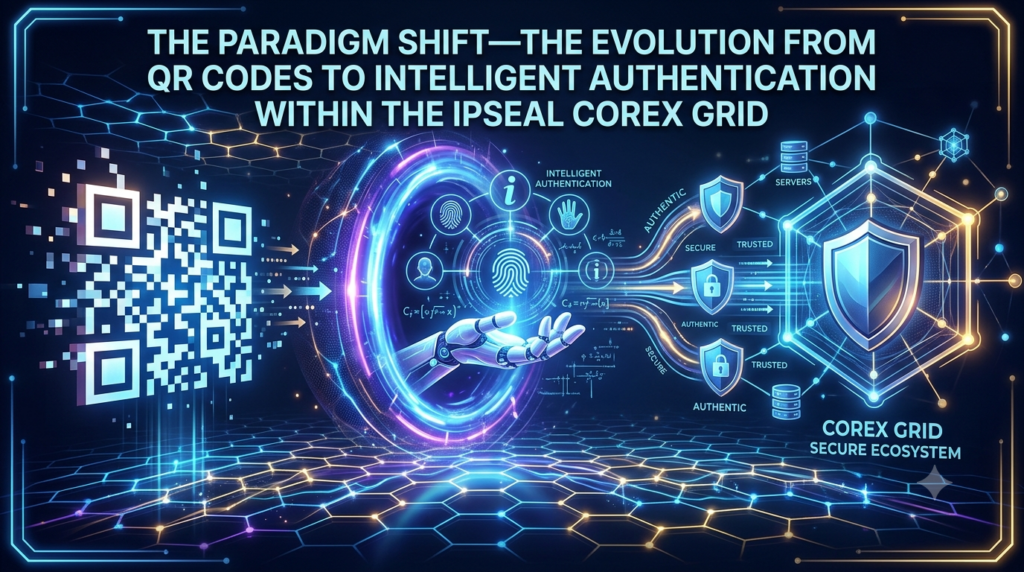
In the early era of supply chain digitization, static optical identifiers—primarily standard Barcodes and Quick Response (QR) codes—revolutionized inventory tracking and retail logistics. They offered a low-cost, convenient mechanism to bridge physical packaging with digital URLs and database records. However, as global trade accelerated and counterfeiting networks evolved into sophisticated technological operations, the fatal flaw of optical codes became glaringly obvious: static printed ink contains zero intrinsic security. Today, relying on basic QR codes for brand protection, high-value authentication, or intellectual property defense is no longer viable.
To address this security deficit, enterprise supply chains are undergoing a paradigm shift toward Intelligent Authentication. Driven by the high-performance computing capabilities of Ipseal CoreX and built upon the proprietary artificial intelligence framework of our independent entity, Entrupy, IPSEAL.NET leads this evolution. This paper outlines the historical transition from vulnerable static markings to active, hardware-enforced, and AI-driven security grids.
1. The Evolutionary Timeline of Physical Asset Identification
The evolution of asset identification reflects an ongoing battle between supply chain security and increasingly advanced counterfeiting methods:
┌────────────────────────────────────────────────────────────────────────┐
│                   THE IDENTIFIER EVOLUTION MATRIX                      │
│                                                                        │
│   [ GENERATION 1: BARCODES & STATIC QR CODES ]                         │
│   Static printed ink ──► Open to 1:1 photo cloning & URL spoofing.     │
│                                   │                                    │
│                                   ▼                                    │
│   [ GENERATION 2: PASSIVE STATIC NFC & HOLOGRAMS ]                     │
│   Fixed RFID/NFC serials ──► Subject to signal emulation & tag peeling.│
│                                   │                                    │
│                                   ▼                                    │
│   [ GENERATION 3: INTELLIGENT AUTHENTICATION (IPSEAL COREX) ]          │
│   Dynamic AES-128 SUN chips + AI Microstructural Fiber Vectoring +     │
│   Parent-Child Token Matrix + Immutable Ledger Inscription.            │
└────────────────────────────────────────────────────────────────────────┘
2. Why Static QR Codes Fail vs. How Intelligent Authentication Operates
The transition from Gen 1 static codes to Gen 3 intelligent authentication represents a fundamental shift in technical capabilities:
┌────────────────────────────────────────────────────────────────────────────────────────┐
│                      GEN 1 STATIC QR vs. GEN 3 INTELLIGENT GRID                        │
├───────────────────────┬────────────────────────────────┬───────────────────────────────┤
│ ARCHITECTURAL FEATURE │ GENERATION 1: STATIC QR CODES  │ GEN 3: IPSEAL COREX GRID      │
├───────────────────────┼────────────────────────────────┼───────────────────────────────┤
│ Payload Structure     │ Fixed Text / URL (Static)      │ Dynamic AES-128 SUN Cryptology│
│ Replay Defense        │ ZERO (Easily Photocopied)      │ ABSOLUTE (Dynamic Nonce/Tap)  │
│ Physical Inspection   │ Surface Optical Alignment Only │ Microstructural Fiber DNA AI  │
│ Component Locking     │ None (Packaging Label Only)    │ AES-GCM 256 Parent-Child Sync │
│ Edge Compute Speed    │ Cloud Query Dependent (Slow)   │ Localized Sub-Millisecond Node│
│ Accuracy Threshold    │ High False Positive Rates      │ 99.98% Precision Benchmark    │
└───────────────────────┴────────────────────────────────┴───────────────────────────────┘
A. Dynamic Cryptographic SUN Hashes vs. Optical Photocopying
-
The Legacy Failure: A static QR code outputs the exact same URL string on every scan. Counterfeiters photograph genuine labels, print them onto thousands of fake items, or redirect users to malicious, spoofed verification websites.
-
The Intelligent Advantage: The Ipseal CoreX powered by Entrupy engine deploys dynamic NTAG 424 DNA silicon enclaves. Utilizing Secure Unique NFC Message (SUN) technology, every tap generates a brand-new, mathematically unique cryptographic payload. Intercepted signals cannot be reused, making replay attacks impossible.
B. Cellular Material Inspection vs. Surface Visuals
-
The Legacy Failure: Optical scanners only verify the printed code itself, completely ignoring whether the material beneath (such as luxury leather or high-grade footwear components) is authentic or a synthetic replica.
-
The Intelligent Advantage: CoreX integrates microstructural computer vision. Utilizing neural feature extraction, the system analyzes raw matter at the micro-level—extracting biological fiber randomness in genuine leathers or textile weave density—and binds this physical signature directly to the asset’s cryptographic passport.
┌────────────────────────────────────────────────────────────────────────┐
│                   DUAL-LAYER COMPONENT SECURITY LOCK                   │
│                                                                        │
│   [ Primary Outer Tag (Parent Key) ]                                   │
│                   │                                                    │
│                   ▼  ◄── AES-GCM 256 Mutual Challenge Handshake ──►    │
│                   │                                                    │
│   [ Internal Material / Component Token (Child Key) ]                  │
└────────────────────────────────────────────────────────────────────────┘
3. The Structural Power of Intelligent Node Networks
Moving to intelligent authentication transforms static tracking into an active, self-defending security mesh:
-
Sub-Millisecond Edge Verification: Powered by our 10th-Generation Central Core, independent validation nodes process dynamic cryptographic challenges and AI feature vector matching locally in sub-milliseconds, ensuring zero bottlenecks across high-speed logistics lines and retail points.
-
Hybrid Closed-Loop Governance: For ultra-high-value assets, our Entrupy platform pairs automated Tier 1 AI checks with Tier 2 encrypted telemetry routed to real-world domain experts, guaranteeing a 99.98% anti-counterfeiting accuracy threshold.
-
Automated Cross-Border IP Defense: Managed under our Entrupy standard, localized statutory trademark registrations and distribution rights are locked into the digital passport, automatically intercepting unauthorized gray-market shipments at local node checkpoints.
Conclusion: Entering the Era of True Asset Sovereignty
Static QR codes were designed for an earlier era of basic inventory management; they were never engineered to withstand modern, high-grade counterfeiting networks. By evolving beyond vulnerable printed marks, the Ipseal CoreX platform, powered by Entrupy, establishes the definitive global standard for intelligent authentication. Fusing bank-grade hardware enclaves, microscopic material computer vision, localized edge computing, and statutory legal auditing into a unified network, IPSEAL ensures that physical assets remain whole, corporate IP is protected, and global enterprise trust operates with absolute, unbreachable velocity.
