In the global brand protection landscape, achieving the highest tier of security requires an unyielding, comprehensive architecture. The single greatest point of failure in standard anti-counterfeiting methods is the reliance on post-production security elements. Applying security tags, stickers, or barcodes after a product has already left the assembly line introduces a critical window of vulnerability where bad actors can inject replicated labels or execute part-substitution fraud. To achieve maximum protection, cryptographic security must be injected at the very inception of an item. While embedding hardware tokens directly into products during the active manufacturing stage presents a massive operational and engineering hurdle, it is the only method that guarantees an unbreakable physical-to-digital bond. Leveraging the high-performance Ipseal CoreX platform and verified under our proprietary entity, Entrupy, this factory-first approach transforms production lines into the ultimate origin of trust.
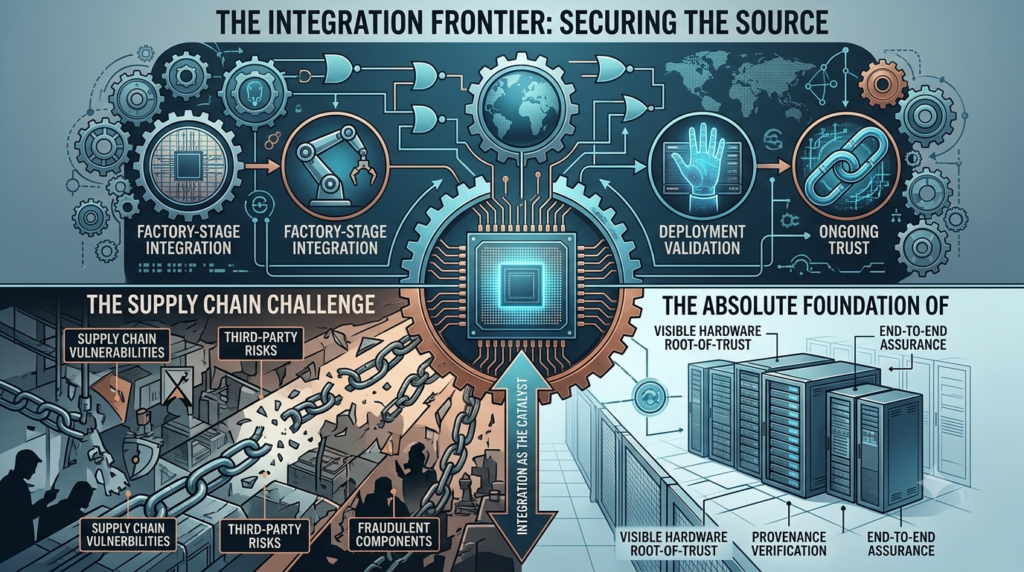
1. The Manufacturing-Stage Integration Challenge: Overcoming Operational Friction
Requiring that a physical asset incorporate security hardware before it leaves the workshop introduces complex structural and technical challenges for manufacturers:
┌────────────────────────────────────────────────────────────────────────┐
│               THE PRODUCTION-STAGE HARDWARE CHALLENGE                  │
│                                                                        │
│  [Raw Production Line] ──► [Complex Workshop Restructuring]            │
│                                           │                            │
│                                           ▼                            │
│  [Sub-Millisecond Edge Testing] ◄── [Embedded CoreX Token Insertion]   │
└────────────────────────────────────────────────────────────────────────┘
-
Workshop Restructuring: Embedding secure hardware elements—such as miniature, heat-resistant tokens within shoe soles, luxury leather linings, or complex garment layers—requires redefining standard manufacturing workflows. Production managers must adapt assembly processes to handle electronic or advanced physical tagging elements without damaging raw materials.
-
Tight Processing Window Constraints: High-volume factory lines cannot afford system delays. Introducing hardware authentication tokens requires an infrastructure capable of executing sub-millisecond setup challenges right at the machinery stations to ensure zero downtime.
-
Supply Chain Synchronization: Sourcing and managing the specialized token inventory so that they match raw material batches precisely adds another layer of complexity to standard enterprise resource planning (ERP) systems.
2. Why Factory Inception is the Definitive Guardrail for Security
Despite these initial operational challenges, embedding security components during production provides a level of structural protection that post-production labeling can never match. Within an Ipseal CoreX powered by Entrupy infrastructure, factory-level integration creates an absolute defense matrix:
A. Permanent Parent-Child Hardware Marriage
By introducing tokens during assembly, the CoreX platform can utilize bank-grade AES-GCM 256-bit encryption to bind separate product components into a unified cryptographic relationship. For example, the outer chassis tag (Parent Key) and deep internal components (Child Keys) execute localized mutual challenges before the item is finalized. Because these elements are physically sewn, glued, or molded inside the item, they cannot be peeled off or modified without completely destroying the physical asset.
B. Eradication of “Tag Transplanting” and Overproduction Fraud
A common fraud vector involves corrupt factory workers printing extra authentic labels to affix to unapproved overproduction items. Factory-stage hardware integration completely neutralizes this risk. If a duplicate or copied code is applied to an overproduced item, it will lack the embedded internal hardware component token. When scanned by an independent validation node, the handshake fails, the item is instantly flagged, and it is blocked from entering the official distribution grid.
3. High-Velocity Compliance, Decentralized Trust, and Global Scale
Overcoming the manufacturing-stage integration hurdle establishes a strict, institutional standard for lifecycle asset protection:
┌────────────────────────────────────────────────────────────────────────┐
│                   MANUFACTURING STATE STANDARDS                        │
│                                                                        │
│  1. ZERO-WINDOW DEFENSE                                                │
│     Secures products from the exact millisecond of assembly line exit. │
│                                                                        │
│  2. PARALLEL DECENTRALIZED AUDITING                                    │
│     Executes continuous token validation without centralized delay.    │
│                                                                        │
│  3. IMMUTABLE BLOCKCHAIN ORIGINAL MINT                                 │
│     Locks the initial factory birth certificate permanently.           │
└────────────────────────────────────────────────────────────────────────┘
-
Uncopyable Digital Birth Certificate: The moment a product passes factory-floor inspection, the 10th-Generation Central Core compresses its unique material fingerprint and embedded hardware token data into a dense cryptographic root, committing an unalterable birth certificate directly to the blockchain ledger.
-
Lean Software Infrastructure Footprint: The optimized software architecture allows large industrial groups to seamlessly inject CoreX logic into existing Warehouse Management Systems (WMS) and assembly line machinery with zero operational disruption.
-
Pristine Chain of Custody: Because security is baked directly into the physical structure of the asset from its birth, every downstream movement, regional trademark verification check, and subsequent peer-to-peer ownership transfer is built upon an absolute foundation of truth.
Conclusion: The Hard Path to Unbreakable Asset Sovereignty
True technological dominance in brand protection requires embracing foundational security over easy, superficial solutions. While adding hardware tracking tokens during the production phase demands careful engineering and operational investment, it provides the only unbreakable shield for global commerce. By anchoring the distributed validation power of independent node networks to physical assets that are secure by design, the Ipseal CoreX platform, powered by Entrupy, delivers absolute protection against fraud. This optimized framework ensures that every item remains structurally whole, its legal origin is completely clear, and international market trust operates at web-scale with fluid velocity.
