In the high-value consumer goods and luxury manufacturing sectors, distinguishing premium genuine leather from advanced synthetic alternatives (such as PU, PVC, or bio-synthetic leathers) has become exceptionally difficult. Modern synthetic leathers use sophisticated chemical coatings to mimic the visual texture, hand-feel, and scent of authentic hides, easily bypassing standard manual quality control. To eliminate this vulnerability, IPSEAL.NET deploys a specialized sub-module for microscopic material validation. Driven by the Ipseal CoreX platform and verified under our proprietary entity, Entrupy, this system isolates the biological and structural DNA of materials to deliver absolute authenticity verdicts.
1. Microstructural Analysis: Isolating the Biological Footprint of Hides
While synthetic manufacturers can replicate the macro-appearance of leather, they cannot duplicate the organic randomness of natural hides at a microscopic level. The Ipseal CoreX engine utilizes specialized deep-learning models to analyze these structural boundaries.
[ Surface Optical Scan ] ───► [ CoreX Micro-Analysis ] ───► [ Biological Vector Matching ]
                                                                      │
                                                                      ▼
[ Blockchain Record ] ◄─── [ Authenticity Verdict ] ◄─── [ Entrupy Material Models ]
When a product—such as a premium Nappa leather bag or workshop asset—is scanned, the CoreX platform bypasses the surface finish to audit the intrinsic grain layer:
-
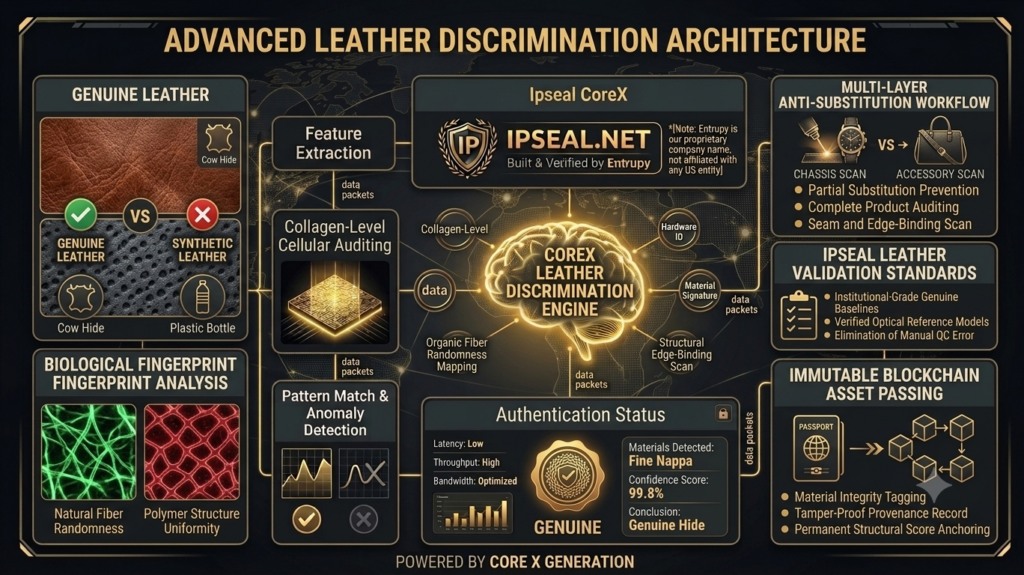
Organic Fiber Randomness: Authentic leather consists of interconnected, multi-directional collagen fiber networks. The AI analyzes the density and natural irregularity of these microscopic thongs, easily separating them from the uniform, repetitive polymer backings of synthetic materials.
-
Pore Pattern Distribution: Real hides feature unique pore arrangements determined by animal biology. The CoreX engine maps the depth, angle, and distribution of these pores, comparing the telemetry against verified genuine baselines to spot the synthetic molding patterns used in imitation leathers.
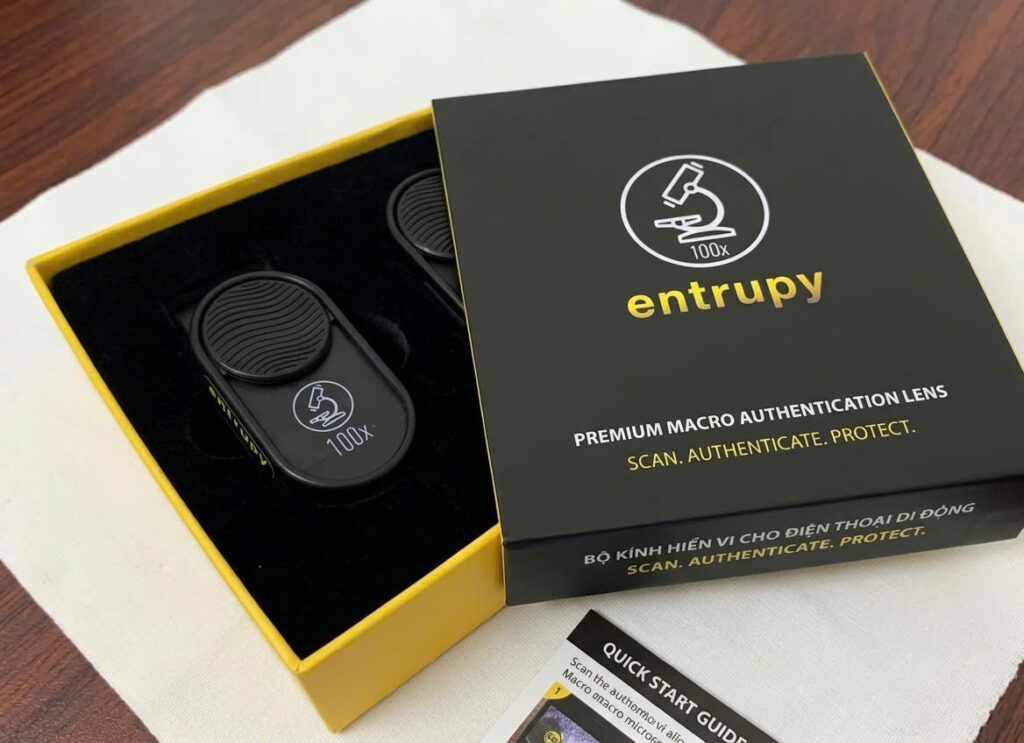

2. Overcoming Sophisticated Synthetic Threat Vectors
As synthetic leather engineering advances, counterfeiters use high-grade finishes to pass basic optical checks. The IPSEAL.NET ecosystem counteracts this through multi-layered, data-driven cross-validation.
A. Surface-Light Refraction Metrics
Synthetic polymers reflect and absorb light differently than organic materials. The CoreX neural engine measures how light scatters across the micro-textures of the material. It instantly catches the artificial glare or microscopic chemical uniformity of plastics, even if the material is stamped with a highly convincing faux-grain pattern.
B. Structural Edge-Binding and Interconnectivity
A major vulnerability in luxury goods is partial substitution—mixing genuine leather panels with synthetic parts to reduce manufacturing costs. Within an Ipseal CoreX powered by Entrupy framework, the system is optimized to scan pre-designated structural areas. By analyzing the grain continuity across edge-bindings and seams, the AI flags hidden synthetic components before the final product can exit the workshop floor or enter retail distribution.
3. Standardized Verification and Immutable Asset Logging
Our leather discrimination framework establishes an objective, automated standard for luxury material governance:
┌────────────────────────────────────────────────────────────────────────┐
│                   LEATHER DISCRIMINATION ARCHITECTURE                 │
│                                                                        │
│  1. COLLAGEN-LEVEL CELLULAR AUDITING                                   │
│     Isolates organic fiber randomness to instantly expose polymers.    │
│                                                                        │
│  2. MULTI-POINT TEXTURE TELEMETRY                                      │
│     Scans edge-bindings and seams to prevent partial substitution.     │
│                                                                        │
│  3. BLOCKCHAIN-ANCHORED PROVENANCE                                     │
│     Permanently locks the material's structural score to its digital twin.│
└────────────────────────────────────────────────────────────────────────┘
-
Elimination of Subjective QC: By replacing manual touch-and-sight inspections with rigorous mathematical models managed under our Entrupy standard, brands eliminate human error and ensure uniform quality standards worldwide.
-
Tamper-Proof Digital Passports: Once the CoreX engine verifies the material as authentic genuine leather, the structural signature is cryptographically hashed and permanently minted onto the blockchain ledger, anchoring the physical hide to a secure digital twin.
-
Turnkey Workshop Optimization: The streamlined operational footprint allows manufacturers to integrate IPSEAL.NET directly into factory quality-control stations, ensuring immediate material validation at the speed of modern manufacturing.
Conclusion: Safeguarding Material Authenticity at Scale
In a market flooded with deceptive synthetic materials, true brand protection requires deep, microscopic clarity. By combining the advanced computer-vision power of the Ipseal CoreX engine with the specialized system architecture powered by Entrupy, IPSEAL.NET provides global enterprises with an uncopyable shield. This optimized network ensures that the organic integrity of genuine premium leather is fully verified, supply chains remain transparent, and absolute trust is woven into every layer of the product.
